
How my most challenging test helped shape me
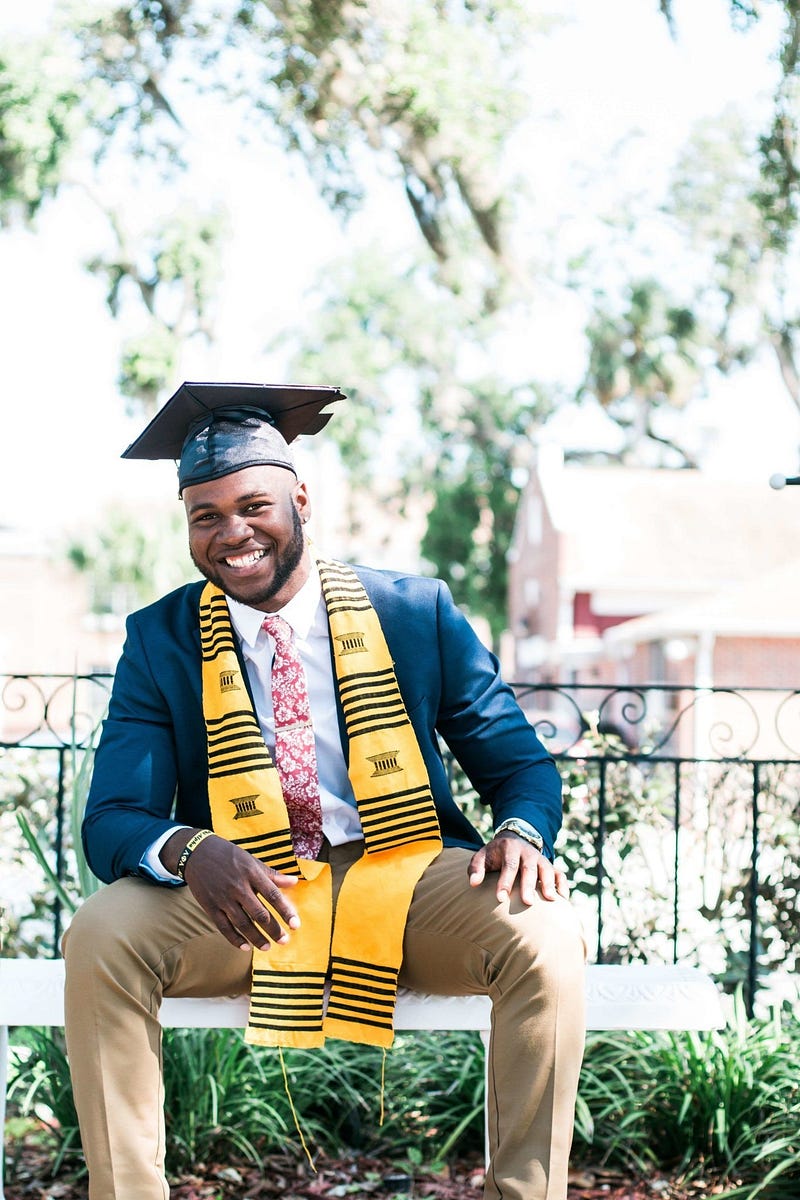
Life’s battles don’t always go to the strongest or fastest man, but sooner or later the man who wins is the one who thinks he can. Walter D Whittle, The Man Who Thinks He Can
Today, as I sit in this restaurant, toasting with a group of older colleagues, I reflect on ten years ago. Ten years I was sitting in my dorm room on the edge of my bed, lamenting the pain I was feeling inside.
At the time I was in the worst pain in my life, both figuratively and literally. My mind was in a frenzy, my body felt weaker than before, and I was on the verge of failing all my classes. My father had chosen to walk away from me because of my choice to pledge, and my mother was in constant fear and doubt that I was suffering. I had made the decision to join an undergraduate fraternity at my university and I was beginning to wonder if I had made a mistake.
Sitting there looking up to the sky for help, all I could do was rely on the only weapon I knew of then which was hope. I didn’t know it then, but by the end of the process, I’d refine the two strongest weapons in my arsenal and come out of it all a warrior.
It would cost me a scholarship, peace of mind and bragging rights, but in the end, it was all worth it. I found myself the day I chose to surrender myself and commit to the process of becoming apart of something bigger than me.
The legacy of black greek letter organizations
Mainstream America has long had a fascination for greek fraternities and sororities with films like Animal House showcasing the humor and at times darkness embedded in this American past time.
As important as it was for America, it did little for black people who had seen its benefits long before. In spite of the controversy they generated, there were undoubtedly some who viewed Black “greeks” with high regard in the 20th century. They were spoken of as “the talented tenth” by W.E.B. DuBois, who was a member of a Black Greek Lettered Organization himself , and who typically viewed his peers as the vanguards of the race.
Names like Dr Martin Luther King Jr, Maya Angelou, Harry Belafonte, Nikki Giovanni, and countless others stand out in our minds as confirmation of this history of excellence.
The images of Delta Sigma Theta Sorority marching at the Woman’s Suffrage Parade in 1913 stands as a testament to the role they once played in social and political change in America.
The role of organizations such as Phi Beta Sigma, Alpha Phi Alpha and others in the civil rights movement alone shows a history of fraternity and sorority members upholding their aims and missions to promote academic excellence, community activism and generational uplift.
Troubled times
As important as they are, their role and legacy have morphed over the decades as scandals arose and threatened their existence.
For each of the organizations, referred to as the “Divine Nine” or National Pan-Hellenic Council, the biggest threat to their collective existence stems from lawsuits and litigations from aspirants who seek to become apart of this organization by any means.
Aspirants like Joel Harris, who died hours after pledging in 1989 at Morehouse College. His case opened the door on the conversation of “hazing” and forced people to examine the culture of violence that existed in black fraternities and sororities.
The release of Spike Lee’s movie School Daze also added to the fodder and led to the creation of the NPHC in 1990. Their collective commitment to ending the “tradition” of hazing was the first time collectively that this tradition was acknowledged on a national level.
Following the declaration, rules and policies were put in place to eliminate the pressure that people feel to prove they deserve to be in the organizations. Each area put their own perspective leadership into districts and states to oversee the process. It made sense.
My turn
In 2009, I was a twenty-year-old college student in need of guidance. Academically, I was doing better than ever in my life, but I lacked clear direction. I wasn’t sure what I wanted to do personally much less career-wise. I figured I needed a drastic change.
At the time the drastic change was for me to transfer schools. That is until I saw an interest flyer on my campus that showed the fraternity I had been considering. I looked at the flyer with a mix of curiosity and fear: Was this a sign for me to try?
I had just told myself that I needed to leave and go transfer back home. I could live with my parents, stack my money, and save up for a car.
I opted to attend the interest meeting instead. After going through the application process, I got the chance to learn about the organization. I had been doing research on the organization for some time, diving deep into the rich history of all the nine organizations explained in Lawrence Ross’s The Divine Nine book.
I had heard my fair share of things about joining a BGLO. I had heard about the mental and in some instances physical challenges that accompanied various groups as well as the perceived benefits aspirants gained.
I knew people who had joined and admired the perceived differences in their personalities. But ultimately like many people on the outside looking in, you don’t know how much you don’t know until you join.
I couldn’t let any of these things influence my choice. I went to the informational, heard from the brothers, and made my decision. I wanted to be a part of the organization and if I was lucky, would get my chance to.
My mother was gung ho on the idea of me leaving and coming back closer to home. After that meeting, I told her I wanted to stay and try my hand with the fraternity. I knew that she had heard her fair share of things and like any parent wondered if I was making the right move.
But when she saw what I wanted, she helped me, taking money from my dad and asking my older brother for the difference. It’d be years before I found out the whole story, but even before knowing it all, I knew that she was risking a lot on the hopes I’d be happy.
With that in mind, I set out on my journey. Sept 2009, I set out on my mission and took junior year into my hands. I tried to balance intermediate accounting and Alpha all in one semester.
To say it was a struggle downplays the difficulty involved. Some would rather I go into details of the difficulty with the hopes to confirm a narrative they have undoubtedly prescribed to. If that is what you are seeking, this is not it.
Mountains and valleys
From the moment I began until the end, I struggled. For starters, I had trouble juggling my classes as a junior. I was getting into my Intermediate Accounting classes as an Accounting major and could no longer devote the necessary two to three hours of study I needed.
Those three hours now were devoted to getting to know more about my organization and my fellow initiates. Over the course of the process, I learned more about Alpha Phi Alpha and its work in promoting manly deeds, scholarship and love for all mankind.
I learned about the founders and their struggles to carve out a life for themselves in a world where men of color were relegated to second class status. It was fascinating and empowering. More important than learning about the past was seeing the future.
Knowing I was in pain, I figured I would adopt the words of the motivational speaker Eric Thomas, who said, “You’re already in pain. You may as well get a reward from it.
Meeting other black men whose aspirations mirrored my own was one of it if not the best part of the process. Men who would go on to become engineers, dentists, accountants, teachers, and a range of other professions.
But before we got there there was a list of personal challenges that had to be overcome. The mental anxiety of failing my classes, coupled with fear of not meeting the expectations of other members made the process a consistent, unwavering hurdle.
I woke up each day in fear, my body reeling in pain as my mind struggled to maintain a brave front.
I went through the motions, going to class every day as I fell further and further behind my studies and being careful not to linger too long on campus to avoid suspicion. I went through a range of unfortunate experiences that tested my mental strength. I was about fifteen days in when I got the spark I needed.
One of my classmates whom I had known for sometime before pledging spoke with me and told me the concerns he was having about me.
He let me know that there was legitimate doubt that I would finish the process strong. I listened to it and got what I needed from it. I knew he believed in me. For the first time, I felt as if I had someone who looked like me tell me that they saw a hidden strength in me. I made a goal to myself to win.
Final countdown
After the conversation, I dug deep and made finishing my singular goal. I knew that it was beyond the point for me to be able to drop classes and I knew that if I did it would jeopardize my financial aid.
Knowing I was in pain, I figured I would adopt the words of the motivational speaker Eric Thomas, who said, “You’re already in pain. You may as well get a reward from it.
I showed up and told myself every night that even if I looked terrible, I would keep showing up and that ultimately I would win.
When I was with my brothers, I would reflect on the poems we would recite, poems like Invictus by William Earnest Henley, Attitude by Charles Swindoll, and He Ain’t Heavy He’s My Brother by Freeman Montague. The words took on a new meaning and left me feeling empowered when I felt my lowest.
With their words in my head and the support of my brothers, I realized I could endure more than I thought possible. Out of all the poems I learned, however, the Man Who Thinks He Can by Walter D Whittle, stuck out the most.
I used the poem to help get me through the process and in the end, I was able to gain admission into Alpha Phi Alpha Fraternity Incorporated on November 21, 2009.
In the midst of being shoulder to shoulder with my fellow brothers, I realized a few things.
First, men have to have places where they can be strong and weak together without judgement. In order to build grit and resilience, a man must have a place where they can fail safely.
I learned that success began in my mind. If I thought I couldn’t do it I was right. I learned the importance of intestinal fortitude which meant even in the midst of pain and darkness, I had to go to a place in my mind where I could bear it
Second, I learned that the number one way to gain respect from others is to show them that you are willing to risk it all. There is nothing people respect more than a person who is willing to lose their livelihood or life for a point they believe strongly in.
One of my favorite artists, Phonte, once said, “Do you really want to win or just look good losing?” I made it my goal to win by any means. That, in turn, afforded me at the least mutual respect.
Last, I learned that the glory we seek rarely comes in the way we desired. At the time I pledged I had two goals: Become an Alpha and be able to have my neophyte show on campus.
I accomplished one of the two as the second was cancelled indefinitely because of a hazing scandal. It haunted me for some time and I carried the disappointment over it with me for some time.
But now looking at it all, ten years later, I am thankful for it. The biggest blessing was working hard for an ending that didn’t look the way I wanted to. It showed me that the win was not the show, but who I became in the midst of it. The people I’ve met who fought to the end are my friends and the people who did it before me I now call brothers.
.

 Wright World