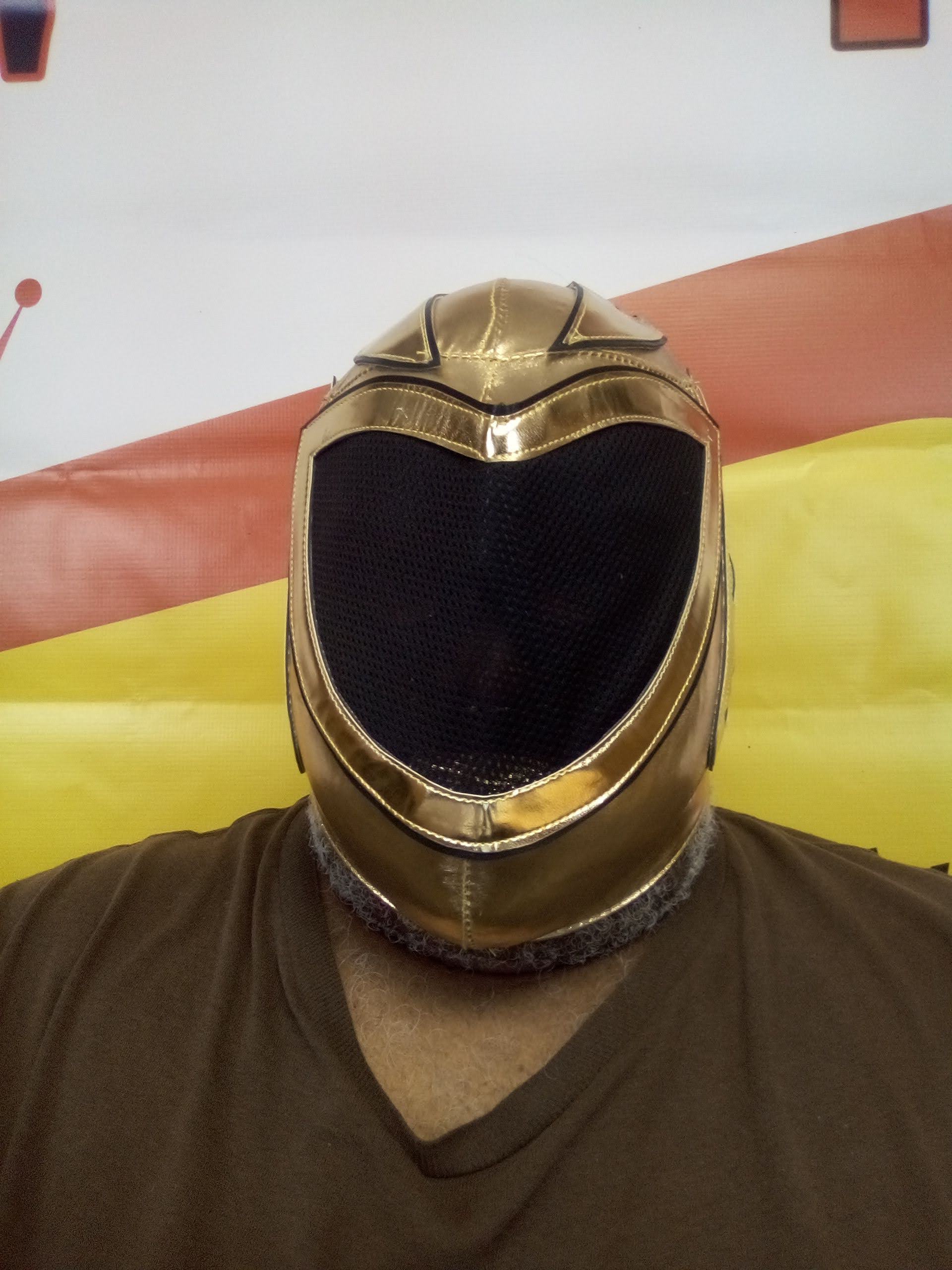
DJ PowerLord is not only the god of bass, but also a treasure chest of Atlanta knowledge.
Casual rap fans and journalists alike often credit OutKast for sparking the flame for Atlanta’s rap music, but if you speak with artists, promoters, and producers from that time, they’ll speak of an earlier era of Atlanta rap dominance. Atlanta’s early rap scene in the 80s was dominated by artists like Mojo, and MC Shy-D. and groups like the Triple Crush and D.J. Kev. All of them set the foundation for the city’s eclectic music scene which included elements of bass, funk, and then later the 808-driven sound known as crunk.
DJs like PowerLord, who helped connect the city’s early rap talents together, represent some of the few people left who can tell the story of the city’s seminal figures including producer extraordinaire Brian Lassiter.
As a music promoter, he helped promote artists like Hitman Sammy Sam and the bass group, The Disco Houndz. Now serving as a host for the critically acclaimed “The After-Set Radio Show,” PowerLord brings the lost elements of Atlanta rap history to his audience.
“Bootsy’s Rubberband’s 1978 album, “Bootsy? Player Of The Year” was the first record I bought. I just started buying records since then.”
Born and raised in Alabama for the first 10 years of his life then transplanted to the Midwest, DJ Powerlord’s early exposure to gospel, funk and then later heavy metal, helped build his musical palette. Captivated at an early age by seeing the names of collaborators in the liner notes, PowerLord made it his goal to become someone important enough to help contribute to a project’s creation and success.
After moving to Georgia at age sixteen, DJ PowerLord got his second education in rap and in particular Atlanta’s growing rap scene.
“When I got here, I wasn’t deep off in rap music. I came from middle America so I was familiar with Twisted Sister and Metallica more than anything. But when I got here I got introduced to a whole new culture, says PowerLord.
Mojo, Atlanta’s first rap artist, was one of the first people PowerLord got familiar with.
“The “Electrifying” Mojo was the man in the city. I never saw him, but party flyers used his name to get people to come to the party. He was the first rapper from Atlanta. From 82-84, he was the rap god, says PowerLord.
Seeing the impact Mojo had on the city and the growing talent around him, PowerLord began dipping his toes into music, first serving as an intermediary for his neighbor, D.J. Kev.
“I was mesmerized by seeing the whole concert set up that he had in his bedroom. Kev had keyboards, turntables, mixers, a Roland 909 drum machine and everything. He was doing what I wanted to do. He told me when he came home from college (Albany State) on Christmas break he was going to make a record. He said he just needed rappers. At that moment, I said wherever he goes I’m going, says PowerLord. PowerLord introduced DJ Kev to a mutual friend of his, Chief Iroc, who then connected him with the Triple Crush.
The resulting record, “We Salute You”, released in 1987, helped PowerLord gain some traction. From there, he went on the road with Triple Crush, serving as a roadie while the group toured the country.
“From 1987-1990, everywhere they went I went. I wasn’t a star though.”
Anxious to create his own lane, PowerLord partnered with Chief Iroc who reached out to the Triple Crush’s producer, Brian Lassiter.
“Brian Lassiter is Atlanta’s first rap producer of name and note. If you ask him, he’ll give credit to PB Floyd, but PB Floyd was known for doing gospel and R&B. Brian was strictly hip-hop. He started this company called DownStairs Production, says Powerlord.
Serving as one of the city’s first rap producers, Brian’s label World Premiere Records and recording out of 2560 Studios served as an early home for some of the city’s rap talent, years before mega labels like LaFace and So So Def were on the scene.
“Brian’s name was on a lot of records coming out of Atlanta. You won’t hear anyone else say this but me, but when Brian went to record the Triple Crush record, the guy who sat in to watch him record and mix it was none other than Jermaine Dupri. He learned how to produce rap records from Brian Lassiter.”
Over time, PowerLord and Chief Iroc grew close to Brian who helped the duo craft their project known as The Demo Tape in 1989. The success of the demo helped solidify PowerLord’s name and cemented Brain’s relationship with both of them. PowerLord’s partnership with Lassiter continued to bear fruits when he got the chance to contribute to one of the acts associated with Brian’s company known as the Boom Boyz.
“Brian was producing this album for a group called the Boom Boyz. The studio owner offered to put it out on his label, but he got into financial trouble. Brian comes to me and tells me if I can get $1200 up I can help put the album out. The Boom Boyz was contractually obligated to another label, but within the group though, there’s another group called the Disco Houndz.”
Brian and PowerLord in turn agreed to finance the Disco Houndz record, entitled Act a Fool. Released in August of 1992 under PowerLord Records, the bass sound fit in perfectly with the Miami and Atlanta bass sound that groups like Success-N-Effect and artists like Raheem the Dream and Kilo Ali made.

 Wright World