
A product of the Georgia Family and Children System, Tristian built his life with the tools in front of him.
Statistics often show a bleak and unavoidable life for the people it focuses on. According to statistics from the Children’s Defense Fund, black children represent some of the highest amounts of children placed in the foster care system. 53% of African American children are subjected to a child protective service investigation by the age of 18. 70% of the youth involved in the criminal justice system come from the foster care system, and 33% of the adults we see out on the streets come from the same system. Despite all the negative numbers and narratives we hear, there remain a slew of young people out there who found their North Star and followed it home.
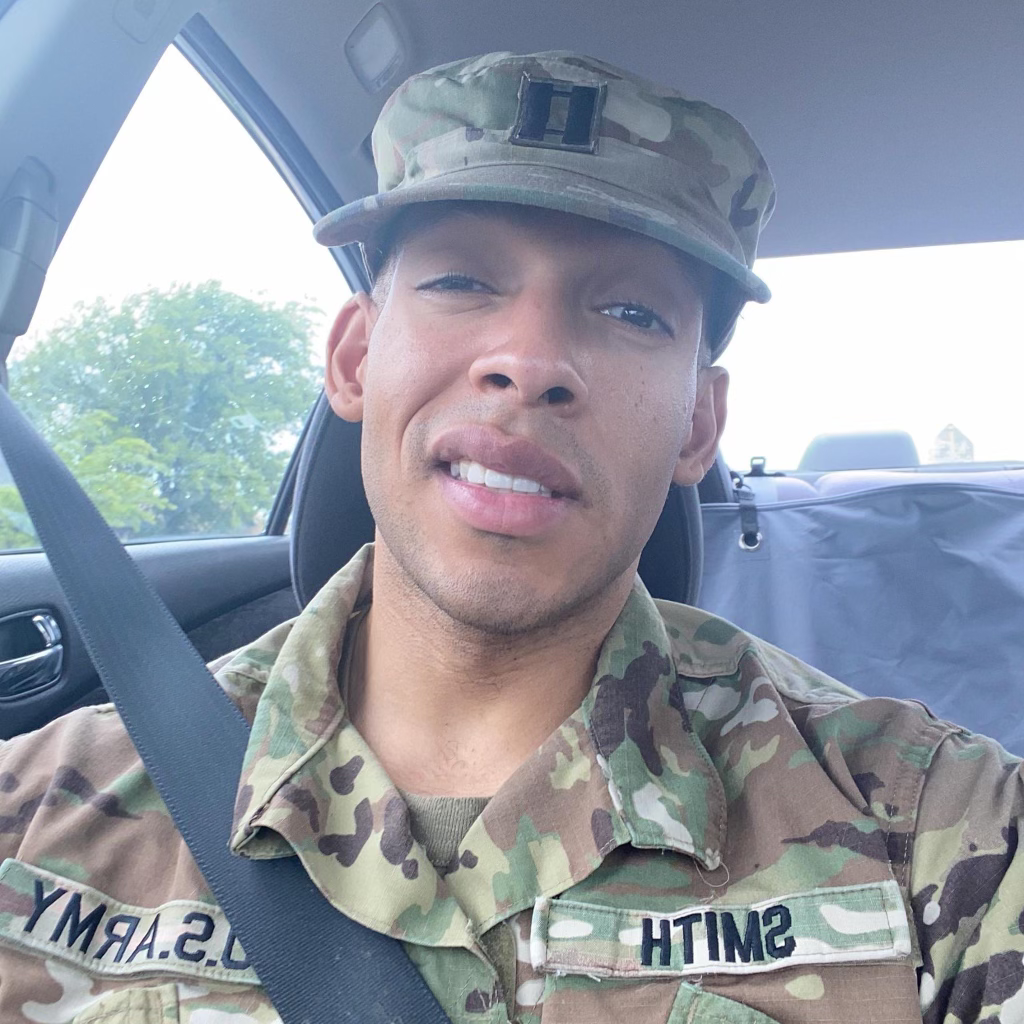
Captain Tristian Smith is an example of someone who’s done just that. Raised in the Georgia DFACS system, he’s got the ranking of captain in the United States Army besides several other personal and professional certifications. Less than a year away from a medical retirement, he’s determined to use his experiences to help steer the youth towards prosperity.
Born in Birmingham, Alabama, Tristian and his younger brother Preston lived there briefly before moving to Columbus as a child. The George Foster Peabody Apartment Complex that he grew up in with his mother, was described by the Housing Authority of Columbus as,” the most distressed community due to its design and construction flaws.” Raised in substandard living conditions, Tristian’s youth was full of many of the trappings of poverty. His mother, loving and present, raised both boys by herself, that is until she succumbed to complications brought on by her asthma condition on March 25, 1996.
The traumatic event altered the course of his life. Recalling the incident in our interview, Tristian describes the event in detail, saying,
“I lost my mother at seven years old. It was about 4:00 AM in the morning and I woke up to sirens. I walked downstairs and I saw the paramedics put my mother on the ambulance. My mother struggled with asthma and while she was on her breathing treatment, she called 911. She died en route to the hospital.”
For the next couple of months, Tristian and his brother lived with their grandmother while his aunt and uncle worked to get full custody of them. What followed their adoption, however, was a tumultuous year of physical abuse that left invisible scarring for Tristian and his brother.
Taken in by his aunt and uncle, both he and his brother experienced physical and verbal abuse primarily because of their biracial identity. Their mother’s family resented the fact the children were half-black and took their prejudice out on the children, calling them racial slurs and beating them.
“It was the most hellacious eighteen months of my life. From there, we experienced every type of racial, mental and physical abuse. Picture an eight and four-year-old being beaten. We’d stand in a corner for eight to nine hours a day. In the summer if we got in trouble, we’d have to stand out by the fence for hours at a time in the middle of the summer. One day, I came to school with black eyes and purple bruises on my back. My principal and teachers got involved and got us out of the home, says Tristian.
From there, Tristian spent the next ten years of his life from eight to ten matriculating through the foster care system. Over the course of his childhood, Tristian moved around the state, attending over thirteen different private and public schools from as far north as Macon, Georgia to Columbus. The change to the constant movement and lack of genuine love made it hard for him to feel at home anywhere.
“It was hard to picture my future when I was just trying to get through the day. The foster care system wasn’t the worst, but I’d said 90% of my foster families didn’t do it for the right reasons, says Tristian.
Despite the instability, he credits the change for helping him learn to adjust to dealing with people from different backgrounds. Over time, Tristian adjusted to the change and showed academic ability, which inspired one of his guidance counselors to take him on a college tour during his senior year.
“When it came time to do scholastic things like my SAT, I took it with only three hours of sleep. I didn’t study and yet I scored around 1590. I was awarded star student of my senior class as a result, but it wasn’t until that last semester of senior year that my guidance counselors pressed me to apply to colleges, says Tristian. In February 2007, Tristian visited two Historically Black Colleges and Universities, Morehouse College and Fort Valley State University. He chose Fort Valley because of how similar the social environment was to his upbringing, but his time there would be far from easy.
Transformative, eye-opening, and painful, Tristian took on the challenge of rebuilding himself physically, mentally, and socially. When asked what made his time there special, he credits relationships with being the force that made him better. Mrs Lisa and Kuumba Rashidi, fixtures on the campus of Fort Valley State University, took on supporting and fortifying Tristian when he came to school, providing him with shelter, food, and food for thought when he most needed it.
“They were the parents every kid who didn’t have parents wished that they had. They were better for me than I was for myself. As a black man, you don’t come across a lot of black male role models. Being around Kuumba, you get two sides, the side that has street smarts and the man of God and husband, who is the voice of reason. To say he was influential is an understatement, says Tristian.
His first major growth came when Tristian shed over sixty pounds, trimming down from 240 pounds to 180. Watching his mother suffer from the health risks of obesity lit a flame in him and provided the impetus for self-change. From there, he enrolled in the Reserve Officer Training Corps, known as ROTC. The structure and discipline helped anchor him and provided him with a future, but it would take time and life to force him to commit.
Unwilling to follow all the rules they put in place, Tristian was almost kicked out of ROTC at the end of his college career. Fortunately, he was able to get himself together, and after graduating with his degree, he became an officer.
“In 2017 when they started increasing the size of the military, I decided I wanted to go on active duty. My first station was in South Korea.” Tristian spent his military career in South Korea, then at Fort Hood, before moving to Manhattan, Kansas.
Currently serving as an Army Chemical Biological Radiological and Nuclear Officer Captain, Tristian is set to medically retire this year. His plan for the next phase of his life includes working in Emergency Management services and also serving as a motivational speaker for children who are in the DFAC system.

 Wright World